
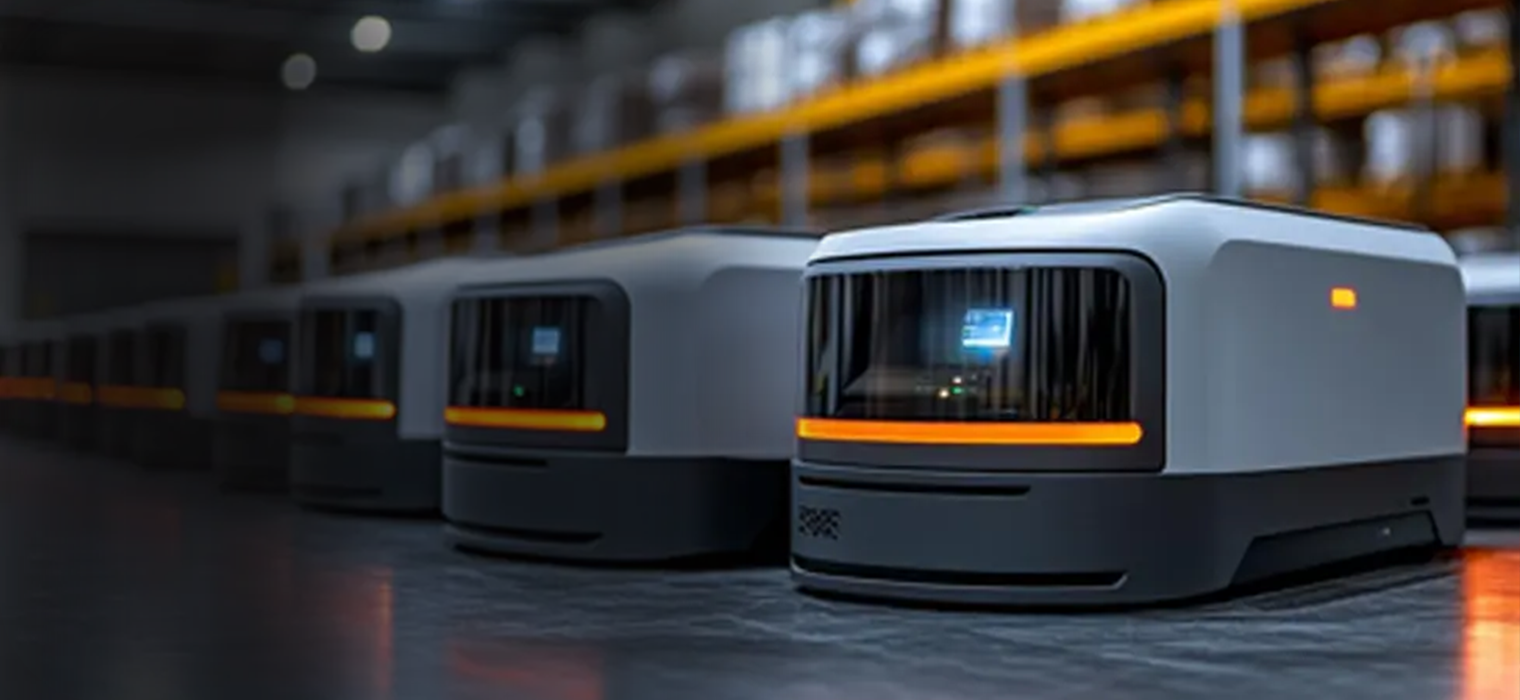

Next-Generation Wireless for
Machines and Autonomous
Systems
We engineer 6G, Wi-Fi 7, Bluetooth 6.0, and advanced RF solutions designed
for sub-millisecond latency, massive MIMO, full-duplex communication, and
deterministic reliability in industrial and autonomous environments.
Key Value Propositions
Akhila Labs delivers compliance-first, medical-grade wearables with end-to-end engineering for
fast, regulatory-ready, and scalable digital health solutions.
Industry Problem
Statement
Current wireless standards (5G, Wi-Fi 6, Bluetooth 5.x) are reaching their performance limits for emerging use cases
Akhila Labs exists to close this gap—from first prototype to scalable, regulatory‑aligned deployments.

Sub-millisecond latency
Full-duplex, low-complexity codecs, and optimized protocol stacks for mission-critical control loops.

Spectrum efficiency & coexistence
Advanced interference management, cognitive radio techniques, and dynamic spectrum access.

Massive MIMO & beamforming
Antenna arrays with mm-wave frequencies for high throughput and spatial multiplexing in dense deployments.

Standardization lag
By the time 6G standards are finalized, industry leaders are already deploying proprietary and pre-standard solutions. Early adopters need guidanceon forward compatibility.
.

Deterministic reliability
Time-slotted scheduling, redundancy, and failover mechanisms for industrial and autonomous vehicles.
interference management.

Forward compatibility
Designed with 6G evolution in mind, avoiding obsolescence asstandards evolve.
Our Solution
Approach
Protocol & Architecture Design
We design custom wireless protocols and architectures tailored to your application

Low-latency MAC layers
- Time-slotted, deterministic scheduling (similar to TSN for Ethernet) ensures predictable latency and jitter for real-time control

Full-duplex communication
We implement self-interference cancellation techniques (analog and digital) to enable simultaneous transmission and reception, effectively doubling bandwidth.
Cognitive radio & dynamic spectrum
Software-defined radio (SDR) techniques allow devices to sense the spectrum and adapt modulation, power, and frequency to avoid interference.
MIMO & Beamforming
Difference Between TinyML and Traditional ML
Modern mmWave communication systems leverage massive MIMO antenna arrays operating at 28–73 GHz, along with hybrid beamforming that blends analog phased arrays and digital precoding to electronically steer and track beams without mechanical movement. Advanced channel estimation techniques, including AI/ML-based methods, continuously analyze complex propagation environments and optimize beamformer weights in real time for reliable, high-capacity directional communication.

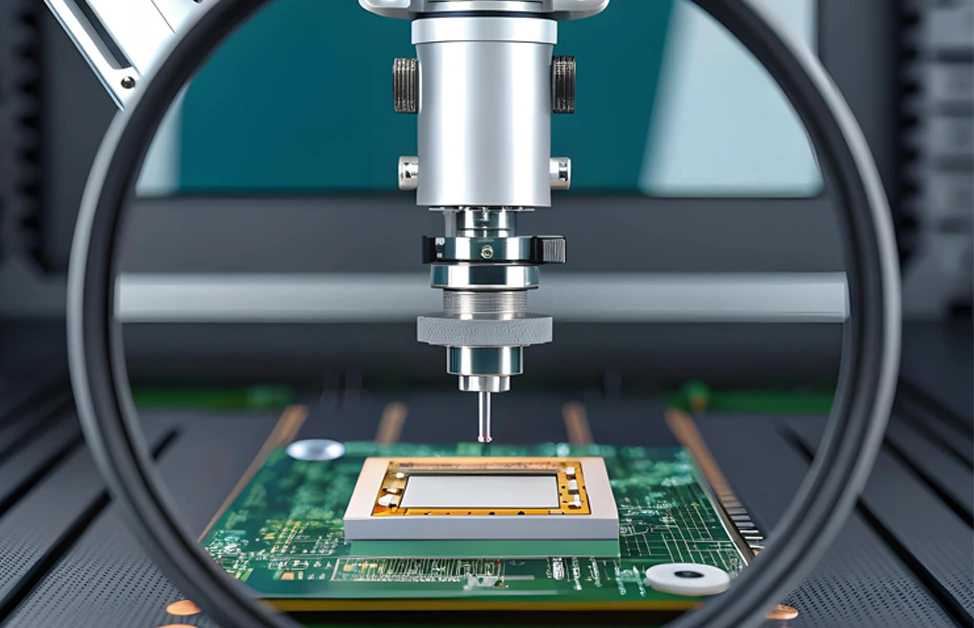
RF & Hardware Design
High-Performance RF & Hardware Design
Our RF and hardware design capabilities include custom transceiver architectures tailored to specific frequency bands and modulation schemes, with optimal silicon selection to balance power efficiency and noise performance. We design advanced antenna systems—such as patch arrays, phased arrays, and lens antennas—along with highly efficient power amplifiers and filters that meet spectral requirements while minimizing power consumption. All RF subsystems are seamlessly integrated with MCUs, FPGAs, and baseband processors for reliable, end-to-end system performance.
Software Radio & Flexibility
Flexible Software Radio Architecture
Our software radio approach leverages industry-standard SDR frameworks such as GNU Radio and USRP, along with custom FPGA-based implementations, to enable rapid prototyping and robust algorithm validation. With flexible firmware and over-the-air update capabilities, systems can adapt to new standards and evolving requirements without hardware redesign.


Standards and Compliance
Regulatory Standards & Certification
We provide end-to-end regulatory and standards support, guiding compliance with FCC, ETSI, and regional spectrum regulations while ensuring adherence to power limits and spectral masks. Our coexistence testing validates reliable operation alongside Wi-Fi, Bluetooth, cellular, and other ISM-band technologies. We also align designs with evolving standards such as 3GPP (5G/6G), IEEE 802.11, and Bluetooth SIG, ensuring long-term compatibility and future readiness.
Use Cases & Applications
Akhila Labs supports a wide spectrum of healthcare and wellness applications:
Industrial control loops
Deterministic wireless for manufacturing floors, replacing wired fieldbus with ultra-low-latency connectivity
Satellite connectivity
Integration of non-terrestrial networks (NTN) with terrestrial systems for continuous coverage.
Autonomous vehicles
Vehicle-to-vehicle (V2V) and vehicle-to-infrastructure (V2I) communication with <1 ms latency for collision avoidance
Full-duplex backhaul
Point-to-point links for infrastructure backhaul, doubling capacity without additional spectrum.
Robotic swarms
High-bandwidth, low-latency inter-robot communication for coordinated flight, manipulation, or navigation.
Cognitive IoT networks
Mesh networks that dynamically adapt frequency, power, and routing to optimize throughput and battery life
Immersive telepresence
Haptic feedback and real-time video with <10 ms round-trip for teleoperated surgery, remote piloting, and XR applications.
Rehabilitation & Orthopedics
IMU‑enabled braces or bands to quantify exercises, range of motion, and adherence
Private LTE/5G networks
Campus or factory-specific wireless networks with dedicated spectrum and performance guarantees.
Clinical Trials & Digital Biomarkers
Multi‑modal patches and sensor kits that capture continuous biometrics and behavioral data for decentralized trials.
Technologies & Tool

Protocol & Simulation
MATLAB/Simulink, SystemVue, GNU Radio, ns-3, custom C/C++ stacks

SDR & FPGA Platforms
Xilinx, Altera, Analog Devices PlutoSDR, USRP, custom FPGA designs

Wireless Measurements & Testing
Vector Network Analyzer (VNA), spectrum analyzer, channel sounder, anechoic chambers

Standards & Documentation
3GPP specs, IEEE 802.11/Bluetooth SIGs, custom technical reports

Hardware Implementation
Custom PCB design, RF layout expertise, transceiver ICs (Analog Devices, TI, Skyworks)

Cloud & DevOps
AWS IoT Core, Azure IoT, GCP IoT, containerized microservices, data pipelines, and CI/CD (GitHub Actions, GitLab CI, etc.) for firmware and cloud releases.
Frequently Asked Questions
At Akhila Labs, embedded engineering is the foundation of everything we build. We go beyond writing firmware that runs on hardware—we engineer systems that extract maximum performance, reliability, and efficiency from the silicon itself.
Can you design a private LTE or 5G network?
Yes. We can architect and deploy private cellular networks using neutral host infrastructure, spectrum sharing, or dedicated licensed spectrum. Ideal for campuses, factories, and remote operations
Is full-duplex wireless practical?
Yes, but challenging. Full-duplex requires >70 dB self-interference cancellation. We've achieved this in controlled environments; deployment requires careful RF design and digital signal processing.
How does cognitive radio improve spectrum efficiency?
Cognitive radio dynamically senses the spectrum and adapts frequency, modulation, and power to avoid interference. This allows devices to "find white space" and opportunistically use available spectrum
What is the latency advantage of deterministic wireless over standard Wi-Fi?
Standard Wi-Fi is contention-based (random backoff), leading to highly variable latency (10–100 ms). Deterministic wireless uses time-slotted scheduling, yielding consistent <5 ms latency.
Subscribe to the Akhila Labs Newsletter
Get the latest insights on AI, IoT systems, embedded engineering, and product innovation — straight to your inbox.
Join our community to receive updates on new solutions, case studies, and exclusive announcements.