

Differentiators
Embedded Engineering That Unlocks the
Full Potential of Silicon
At Akhila Labs, embedded engineering is the foundation of everything we build. We go beyond writing firmware that runs on hardware—we engineer systems that extract
maximum performance, reliability, and efficiency from the silicon itself.

0 +
Embedded
Platforms delivered
0 +
Custom BSPs &
Low – Level Systems
0 +
Edge & Multicore
Deployments
0 +
Production-Grade,
Field-Proven Design

Differentiators
The "Silicon-to-System" Approach
Safety-Critical
Modernization
We are pioneering the adoption of Rust in embedded systems. Byleveraging Rust’s memory-safety guarantees, we eliminate entire classes of bugs (buffer overflows,null pointer dereferences) that plague legacy C/C++ codebases, reducing post-deployment patches and enhancing security.

Full-Stack Hardware Context
Our firmware engineers sit alongside our hardware design team. This proximity allows for “co-design,” where pin-muxing, power domains, and clock trees are optimized in tandem, preventing the “throw it over the wall” inefficiencies common in pure-play software vendors.
The Stability of Deep Tech Talent
Leveraging the high-retention engineering ecosystem of Ahmedabad, our teams maintain long-term continuity on your projects. This allows for deep accumulation of domain knowledge, essential for maintaining complex codebases over product lifecycles that can span decades.
Technical Capabilities Deep Dive
The BSP is the foundation of any embedded system. We develop production-grade BSPs tailored to your custom hardware, not just reference designs.
- Bootloader Customization: Optimization of U-Boot, LittleKernel (LK), or secure bootloaders (HAB) to ensure rapid start-up times (e.g., <2 seconds for automotive rear-view cameras) and secure chain-of-trust verification.
- Kernel Hardening: Customizing the Linux kernel for footprint reduction, real-time performance (PREEMPT_RT patches), and security hardening (SELinux/AppArmor).
- Peripheral Drivers: Writing and backporting drivers for complex peripherals including MIPI-CSI/DSI for displays/cameras, PCIe for high-speed interconnects, and industrial protocols like CAN-FD and EtherCAT.
For systems requiring deterministic latency, generic operating systems fall short. We architect solutions using.
- Asymmetric Multiprocessing (AMP): On heterogeneous SoCs (e.g., NXP i.MX8, STM32MP1), we isolate critical real-time control loops on the Cortex-M core (running FreeRTOS or Zephyr) while running rich UI/Network stacks on the Cortex-A core (running Linux). We implement effi cient Inter-Processor Communication (IPC) using shared memory (RPMsg) to ensure synchronization without latency.
- We are transitioning many legacy proprietary RTOS projects to Zephyr, taking advantage of its open-source ecosystem, device driver model, and long-term support (LTS) to future-proof client products.
Functional Safety & Compliance Engineering In regulated industries, code quality is a matter of life and safety.
- Standards Compliance: Our development processes align with ISO 26262 (Automotive ASIL-B/C/D), IEC 62304 (Medical Software), and IEC 61508 (Industrial Safety). We utilize static analysis tools (Coverity, PC-Lint) to enforce MISRA-C:2012 and AUTOSAR C++14 coding standards
- Automated Testing: We implement Hardware-in-the-Loop (HIL) testing pipelines, allowing automated regression testing on physical hardware with every commit, ensuring that changes do not break critical hardware timing
Tech Stack & Toolchain

Category
C (C99/C11), C++ (C++14/17/20), Rust (Embedded HAL), Assembly (ARM/RISC-V)

Operating Systems
Embedded Linux (Yocto, Buildroot), Android(AOSP), QNX, VxWorks,FreeRTOS, Zephyr,ThreadX, Bare Metal

Architectures
ARM Cortex-M0+/M3/M4/M7, Cortex-A, RISC-V,x86, ESP32 (Xtensa)

Silicon Partners
NXP (i.MX, S32K), STMicroelectronics (STM32),TexasInstruments(Sitara,MSP430), Nordic Semi(nRF52/53),Qualcomm

Connectivity
BLE 5.x, Wi-Fi 6, LoRaWAN, NB-IoT/LTE-M,Zigbee, Thread (Matter),CAN/CAN-FD, LIN,Modbus, EtherCAT

DevOps & QA
Jenkins, GitLab CI, Docker, JTAG/SWD (SeggerJ-Link), Oscilloscopes, Logic Analyzers, VectorCANoe/CANalyzer
Industries Served

Automotive
Telematics Control Units (TCU), Infotainment (IVI), Digital Instrument Clusters, ADAS Sensor Fusion, EV Battery Management Systems (BMS).
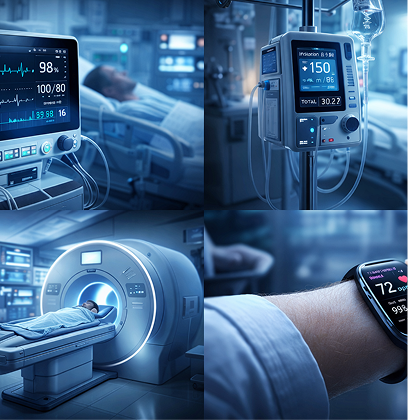
Medical Devices
Patient Monitoring Systems, Infusion Pumps, Diagnostic Imaging, WearableHealth Trackers (Class II/III).

Industrial Automation
Human-Machine Interfaces (HMI), Programmable Logic Controllers (PLC),Industrial Gateways, Motor Control.
Frequently Asked Questions
At Akhila Labs, embedded engineering is the foundation of everything we build. We go beyond writing firmware that runs on hardware—we engineer systems that extract maximum performance, reliability, and efficiency from the silicon itself.
Can you integrate LiDAR, cameras, and other sensors for autonomous navigation?
Yes. We design sensor fusion pipelines using EKF/UKF, implement SLAM for GPS-deniedenvironments, and integrate multiple sensor modalities (LiDAR, RGB, depth, radar) for robustautonomous navigation.
How do you test autonomous drone behavior before real-world deployment?
We use simulation-first development with PX4 SITL/HITL in Gazebo/Ignition for virtualenvironments, hardware-in-the-loop rigs, and staged field trials with progressive autonomylevels
Subscribe to the Akhila Labs Newsletter
Get the latest insights on AI, IoT systems, embedded engineering, and product innovation — straight to your inbox.
Join our community to receive updates on new solutions, case studies, and exclusive announcements.