

MEDICAL-GRADE
WEARABLE’S FROM
PROTOTYPE TO REGULATORY
READY DEPLOYMENT
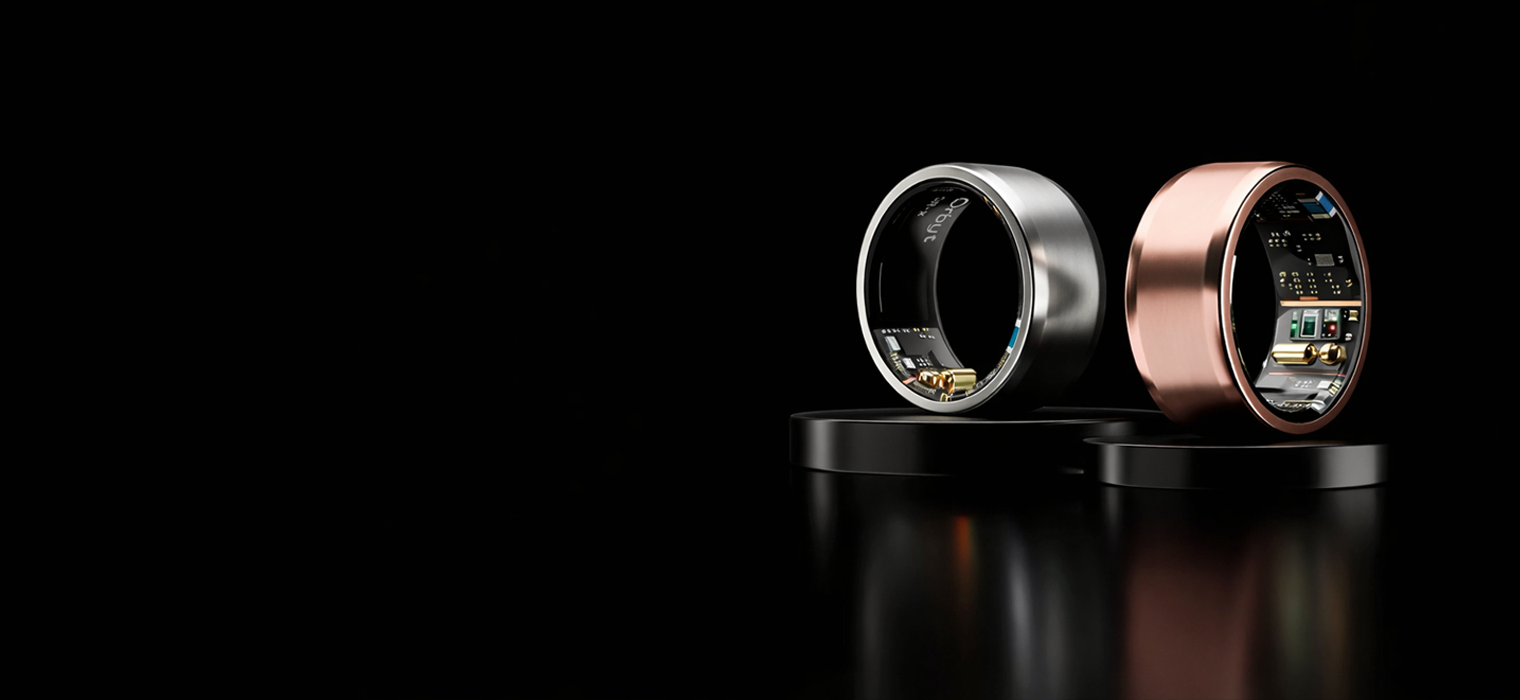
Akhila Labs designs end-to-end medical wearables and healthcare IoT—biosensors, ultra-low-power hardware, compliant firmware, connectivity, edge AI, and secure cloud—for remote patient monitoring and digital health.
Key Value Propositions
Akhila Labs delivers compliance-first, medical-grade wearables with end-to-end engineering for
fast, regulatory-ready, and scalable digital health solutions.
Industry Problem
Statement
Healthcare is shifting from episodic, in‑clinic care to continuous, data‑driven care. But building regulatory‑grade wearables and RPM solutions that are actually deployable in clinical environments is non‑trivial. Key challenges your team is likely facing
Akhila Labs exists to close this gap—from first prototype to scalable, regulatory‑aligned deployments.

Prototype‑to‑product
gap
Many teams prove concepts on dev boards but stall when facing IEC 62304 documentation, ISO 14971 risk management, and FDA 510(k) expectations. What worked in a lab does not directly translate into a traceable, auditable medical device lifecycle.

Signal integrity in tiny form factors
Smart rings, patches, and hearables compress sensor spacing and electrode geometry, degrading PPG SNR and making ECG highly susceptible to motion artefacts—leading to false alarms and non‑diagnostic signals.

Power vs. performance trade‑offs
Continuous vital sign monitoring (ECG, SpO₂, respiration, motion) requires heavy duty‑cycling of sensors, AFEs, radios, and MCUs. Without deep co‑design, devices cannot reach 7–14 days of battery life needed for ambulatory monitoring and adherence.

RF and connectivity reliability
BLE links must coexist in crowded 2.4 GHz hospital environments, and devices must gracefully handle intermittent connectivity in home settings, without data loss or patient‑visible failures.

Security and PHI protection
Any weakness in pairing, OTA updates, or cloud integration is a potential HIPAA and regulatory liability, eroding clinician and patient trust.

Fragmented skill sets
Analog front‑end design, firmware, BLE/LE Audio, TinyML, mobile, cloud, and regulatory understanding rarely exist in one team—causing handoff latency, bugs, and missed deadlines.
Our Solution
Approach
System & Signal Chain Architecture
Akhila Labs follows a compliance‑first, deep‑tech architecture approach. The system is engineered end‑to‑end, starting from the analog front‑end and sensor physics.

Device Layer (Wearable / Sensor Node)
- Medical‑grade AFEs for ECG/PPG/Bio‑Z (e.g., TI AFE49xx, ADI ADPD4xxx, MAX ECG/PPG AFEs)
- Dedicated sensor front‑ends for SpO₂, heart rate, HRV, respiration, temperature, motion
- Ultra-low-power MCUs (Nordic nRF52/nRF53, STM32L4/U5, Ambiq) with on-device DSP and TinyML

Gateway / Edge Layer
- Smartphone companion apps (iOS/Android) or dedicated gateways (Linux SBCs)
- BLEBLE → Wi‑Fi/LTE/NB‑IoT bridging, buffering, and QoS prioritization for critical events
- Local rules and fallbacks for offline operation and store‑and‑forward mechanisms

Cloud & Integration Layer
- Ingestion via MQTT/HTTPS with mutual TLS, rate limiting, and multi‑tenant architectures
- Time‑series data stores, feature stores, and analytics pipelines for risk scoring and dashboards
- FHIR/HL7 APIs and integration services for EHR/EMR/HIS connectivity
- Role‑based portals for clinicians, admins, and device operations teams
Firmware Engineering & Software Lifecycle
Firmware is Engineered with IEC
62304 Class B/C in Mind
- Deterministic RTOS architectures (Zephyr, FreeRTOS) with clear
separation of safety‑critical sensing from Bluetooth/UI stacks. - Use of MPU and memory isolation so failures in communication stacks cannot compromise vital sign acquisition loops.
- Watchdogs, brown‑out detection, and independent clock sources for deterministic recovery from faults.
- Full lifecycle artefacts: SRS/SDS,architecture documents, unit/integration tests, traceability matrices, and V&V packages that plug into your DHF.

Connectivity, BLE & LE Audio / Auracast
Connectivity Optimized for Robustness, Security, and UX
- Device connectivity:
BLE 4.2/5.x (GATT), multi-connection, LE Secure Connections for hospital and home use. - LE Audio & Auracast:
- LC3 low-latency, high-quality audio
- Multi-Stream Audio for left/right sync
- Auracast for public assistive listening
- Uplink: HTTPS/MQTT over TLS 1.2/1.3.
- Time sync & control: NTP and lightweight protocols (e.g., CoAP).
Algorithms, DSP & Edge AI / TinyML
Akhila Labs Blends Classical DSP with TinyML for on-Device Intelligence.
- Signal conditioning: IIR/FIR and adaptive filtering.
- Derived metrics: HR, HRV, SpO2, respiration, arrhythmia.
- TinyML: Arrhythmia, fall, sleep, and anomaly detection.
- Deployment: INT8 models via TFLM, CMSIS-NN, or DSP libraries.


Compliance, Quality & Testing
Compliance is Embedded into the Engineering Process, not Patched at the End
- Standards alignment:
IEC 62304 (software lifecycle), ISO 14971 (risk), ISO 13485 (quality systems). - Hardware & safety:
Aligned with IEC 60601-1 and IEC 60601-1-2 where applicable. - Test coverage:
Long-duration soak tests (1,000+ hrs), RF coexistence, OTA reliability, and environmental stress. - Validation tools:
ECG simulators, SpO2 testers, and reference devices for calibration and verification.
Use Cases & Applications
Akhila Labs supports a wide spectrum of healthcare and wellness applications:
Remote Cardiac Monitoring
Multi‑day ECG patches with on‑device arrhythmia detection and efficient cloud offload.
Smart Hearing Aids & Assistive Listening
LE Audio / Auracast‑enabled devices that receive high‑quality broadcast audio in public and enterprise venues.
Chronic Disease Management
Connected peripherals and wearables feeding into RPM platforms and clinician dashboards.
Vital Sign Rings & Miniaturized Wearables
Rings, patches, and tiny wearables for HR, HRV, SpO₂, temperature, and sleep metrics.
Continuous Glucose Monitoring (CGM) Ecosystems
Low‑power electrochemical sensing, NFC/BLE bridges, and smartphone integrations
Sleep Monitoring & Apnea Pre‑Screening
PPG, motion, and SpO₂‑based devices for sleep stage estimation and desaturation detection
Post‑Operative & Hospital‑at‑Home Programs
Multi‑parameter vital sign wearables and kits with gateways that feed into telehealth workflows.
Rehabilitation & Orthopedics
IMU‑enabled braces or bands to quantify exercises, range of motion, and adherence
Elderly Care & Assisted Living
Fall detection pendants and wristbands, motion and activity monitoring, geofencing, and emergency alerting.
Clinical Trials & Digital Biomarkers
Multi‑modal patches and sensor kits that capture continuous biometrics and behavioral data for decentralized trials.
Technologies & Tool

Sensors & AFES
ECG, PPG/SpO₂, Bio‑Z, temperature, respiration, 6/9‑axis IMUs, pressure, GSR; TI AFE49xx, ADI ADPD4xxx, MAX series AFEs, and other medical‑grade front ends.

Microcontrollers & SoCs
Nordic nRF52/nRF53, STM32L series, Ambiq Apollo, low‑power ARM Cortex‑M0/M4/M33/M55, and application‑class SoCs for gateways (Raspberry Pi, Jetson, NXP i.MX)

Wireless & Connectivity
BLE 5.x, LE Audio/Auracast, Wi‑Fi (incl. Wi‑Fi 6), LTE‑M/NB‑IoT, classic LTE/5G via gateways, NFC, and occasionally Thread/Zigbee/LoRaWAN where required.

RTOS & Embedded Software
Zephyr RTOS, FreeRTOS, bare‑metal C/C++, and Embedded Linux (Yocto‑based) for gateways, with secure boot loaders and OTA stacks.

AI/ML & DSP
TensorFlow Lite for Microcontrollers, Edge Impulse, CMSIS‑NN, Python training pipelines; classical DSP (MATLAB/NumPy/SciPy) for filter design and validation.

Cloud & DevOps
AWS IoT Core, Azure IoT, GCP IoT, containerized microservices, data pipelines, and CI/CD (GitHub Actions, GitLab CI, etc.) for firmware and cloud releases.
Frequently Asked Questions
At Akhila Labs, embedded engineering is the foundation of everything we build. We go beyond writing firmware that runs on hardware—we engineer systems that extract maximum performance, reliability, and efficiency from the silicon itself.
Can you integrate LiDAR, cameras, and other sensors for autonomous navigation?
Yes. We design sensor fusion pipelines using EKF/UKF, implement SLAM for GPS-deniedenvironments, and integrate multiple sensor modalities (LiDAR, RGB, depth, radar) for robustautonomous navigation.
How do you test autonomous drone behavior before real-world deployment?
We use simulation-first development with PX4 SITL/HITL in Gazebo/Ignition for virtualenvironments, hardware-in-the-loop rigs, and staged field trials with progressive autonomylevels
Subscribe to the Akhila Labs Newsletter
Get the latest insights on AI, IoT systems, embedded engineering, and product innovation — straight to your inbox.
Join our community to receive updates on new solutions, case studies, and exclusive announcements.